

The Only Product Strategy You'll Ever Need
It ain’t what you don’t know that gets you into trouble. It’s what you know for sure that just ain’t so. – Mark Twain
I find that Howard Mark’s 1993 Memo, The Value of Predictions, or Where'd All This Rain Come From? covers all the product strategy I ever need. Mark’s core thesis is that only non-consensus, contrarian, predictions lead to extreme outcomes. If your non-consensus forecast is correct, you will net outsized returns. However, if it is incorrect, you will end up far behind the average. On the other hand, if you make a consensus prediction and follow it, you won’t beat the average regardless of accuracy.
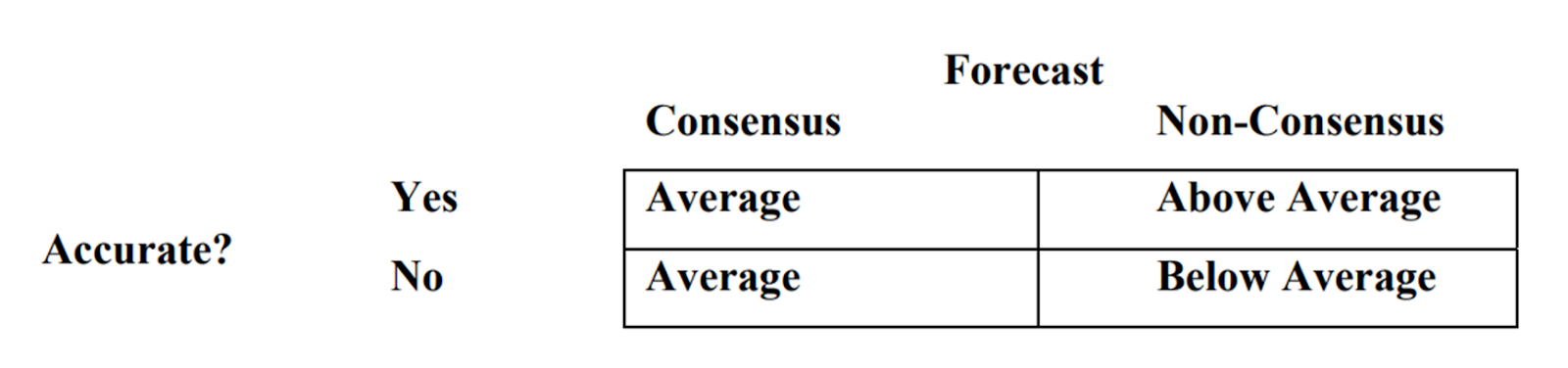
This is a startling idea. Isn’t being “right” always better than being “wrong”? Not when you’re trying to beat the market and especially not for venture backed businesses.
This idea is especially powerful when building disruptive products. Here, the goal is also to beat the market (incumbents) and uncover emergent behavior that no one has tapped into. In other words, are your features differentiated (non-consensus) and do they meet user needs.
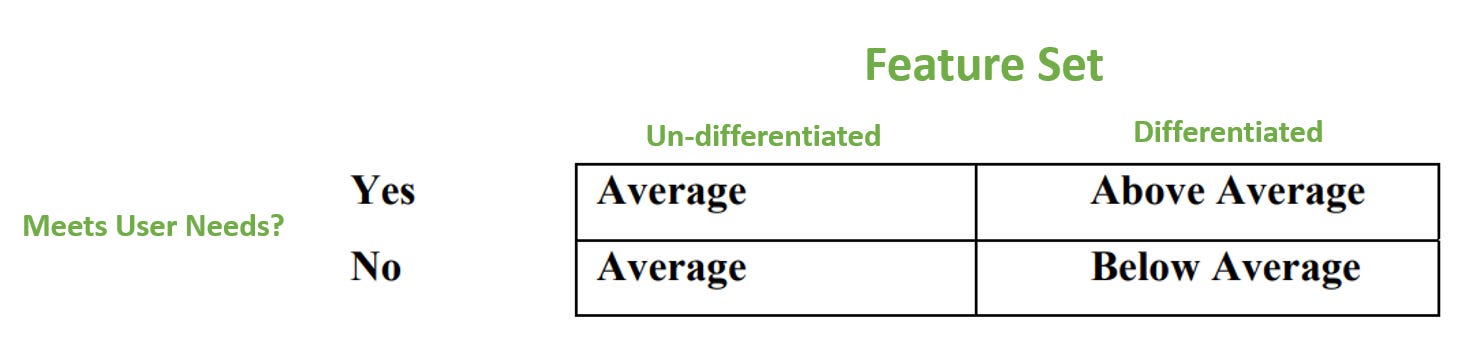
If you build a set of features significantly differentiated from anything in the market and meet user needs, chances are high that you have built a disruptor -- a company that has an asymmetric advantage over competitors and is significantly better than the alternative.
The clothing company FIGS is a great example. FIGS differentiates by selling scrubs that are both fashionable and functional, marketing themselves more like Nike and less like a medical supply company. Through this key differentiator FIGS discovered an underserved need and charge 5-10x the cost of traditional scrubs. Who would have predicted that hospital scrubs needed a major disruption?
If the features are differentiated but do not meet user needs, your customers will let you know immediately. This isn't actually the worst-case scenario. Failing fast means saving time and having more cycles to iterate, assuming you iterate.
The true worst-case scenario for a product is building undifferentiated features that copy existing companies and follow the popular zeitgeist. The danger here is that it seems like you are doing everything correctly i.e. it is a feature that other products have and is popular, but no one is using it in your product.
Even if this feature does not meet user needs well, by virtue of being popular, it can seem like you’re on the right path and you need just a little more marketing, growth, or time to make it work. This paradox leads many products to a slow, painful, death.

Building differentiated products takes a strong will and the ability to learn and course correct quickly. If you find yourself building undifferentiated products remember, you’ll stay alive and drag on but the product will never really break out and become a disruptor. It takes courage to throw away the “right” and start doing something “wrong”.
Footnote: The real, real worst case is making uninformed contrarian opinions i.e. “hot takes” without any real insights behind it. Cry wolf enough time and you’ll lose your credibility as well.
Thank you to Maya, Luis, and Vishal for feedback on the drafts.